Living in Eixample, Barcelona
Your Surroundings
Getting Around
Sarrià (FGC L6, L12 – train)
Les Tres Torres (FGC L6 – train)
Reina Elisenda (FGC L12 – train)
Daily Essentials
Mercat de Sarrià (Fresh local produce market)
Caprabo - Major de Sarrià (Well-stocked neighborhood supermarket)
CEM Can Caralleu (Gym, pool, sports facilities)
Culture & Landmarks
Parc del Castell de l'Oreneta (Wooded park, panoramic views)
Monestir de Pedralbes (Gothic monastery complex)
Plaça de Sarrià (Historic village-style square)
Understanding Eixample
Why people choose Eixample
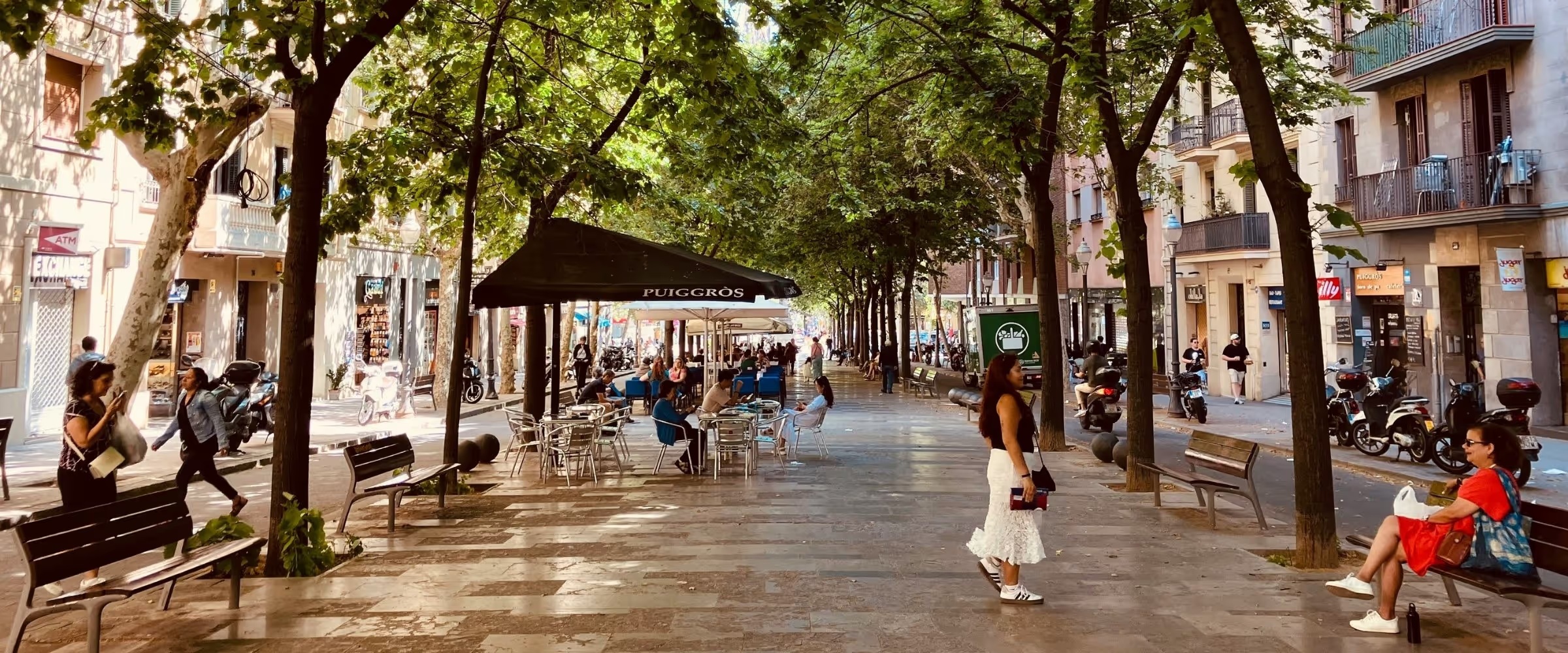
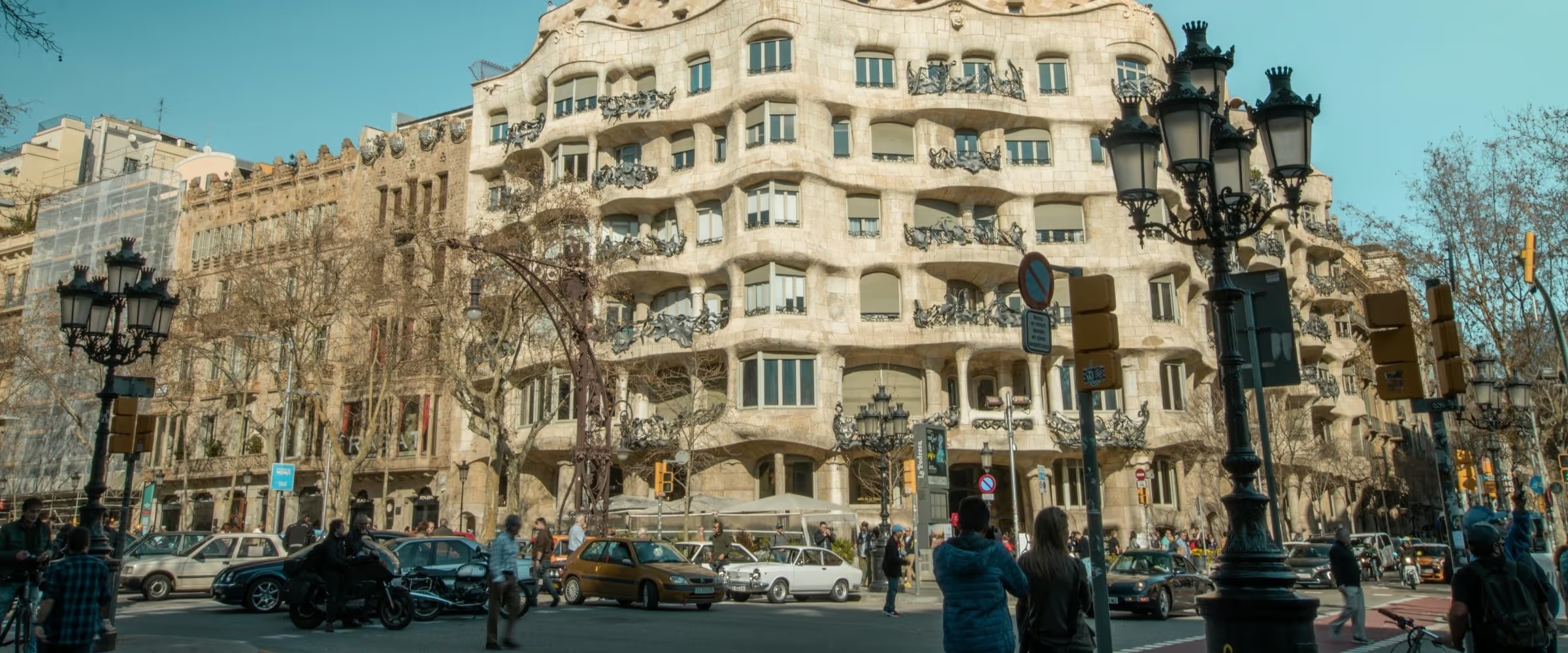
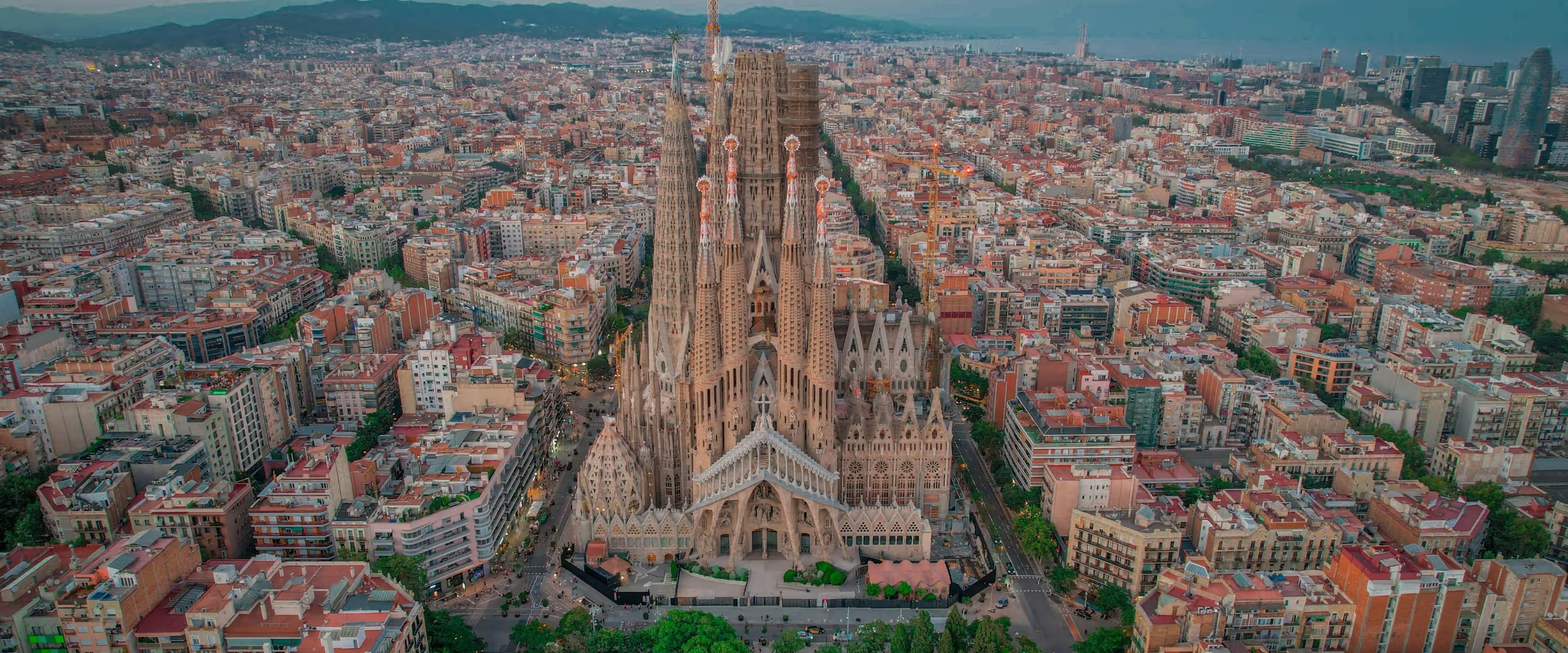
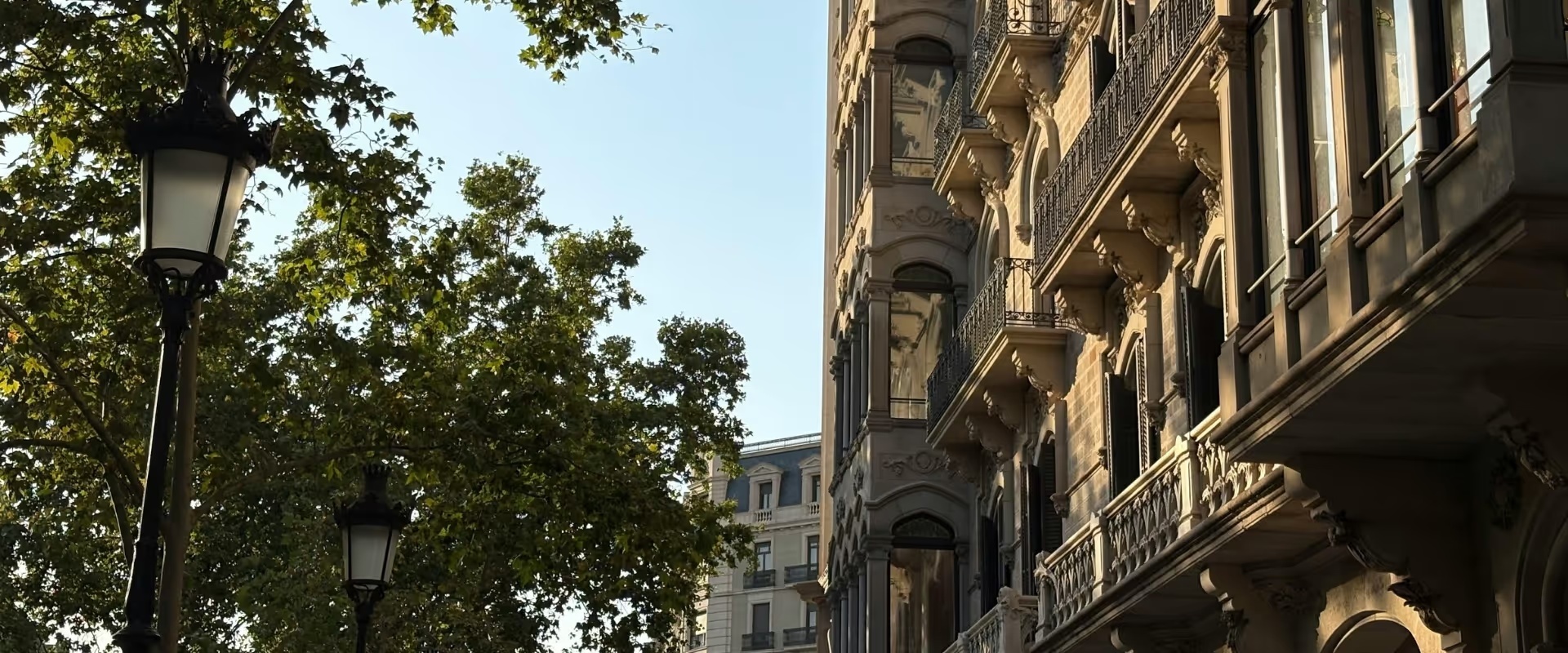
Eixample is Barcelona's central grid, the district Ildefons Cerdà laid out in the 19th century with wide streets, octagonal blocks, and chamfered corners that pull light and air into every junction. What ties its six neighbourhoods together is that grid and the run of Modernista facades along it, from Gaudí to Domènech i Montaner. You get a resident mix of local families, working professionals, students, and long-term internationals, drawn by walkability and services on every block. The district ranges from lively, visited zones like the Dreta and Sagrada Família to calmer, more residential pockets such as the Nova Esquerra and Fort Pienc, so you can set your own pace without leaving the grid.
History and Character of Eixample
After Barcelona tore down its medieval walls in the 1850s, the city needed room to grow. Ildefons Cerdà won approval for a grid stretching toward the then-separate town of Gràcia, and construction began in 1860. The wealthy built along Passeig de Gràcia, on the favoured side of the old railway, which is why the Dreta still holds the grandest apartments and the densest run of Modernista showpieces. West of the tracks, the Esquerra filled in with middle-class housing, while Sant Antoni grew around its market and Fort Pienc around an old fortress square. That split origin explains today's contrast: uniform blocks on the outside, very different street life within.
Daily Life in Eixample
Shopping and Commercial Hubs
For big shopping trips, the district's spine is Passeig de Gràcia, where international luxury houses and flagship stores line the boulevard. A block west, Rambla de Catalunya runs mid-range fashion, shoes, and terraces down toward Plaça de Catalunya, home to the large El Corte Inglés department store. Avinguda Diagonal adds more high-street and homeware names. For food and everyday goods, three restored covered markets anchor the district: Mercat de Sant Antoni, Mercat del Ninot, and Mercat de la Concepció. Near Glòries, the open-air Els Encants market covers secondhand and household finds.
Education
Families have a dense choice of public primaries across the grid, including Escola Fort Pienc, Escola Ferran Sunyer, Escola Joan Miró, and Escola Ramon Llull in its Noucentista building on Avinguda Diagonal. Several institut escoles cover secondary years, and private and concertada options such as Jesuïtes Casp sit within the district. Municipal nurseries (escoles bressol) are spread through each neighbourhood. For higher education, the historic Universitat de Barcelona building anchors Plaça de la Universitat, and colleges of Universitat Ramon Llull, including Blanquerna, run programmes in and around the centre.
Health and Medical Services
Healthcare coverage is strong. The Hospital Clínic on Carrer de Villarroel serves the Esquerra side and has its own metro stop, offering emergency care and a full range of specialties. On the Dreta side, the modern Hospital de la Santa Creu i Sant Pau near the Sagrada Família handles complex care, supported by Hospital Dos de Maig for the wider Eixample. Private options include Hospital Sanitas CIMA and the internationally known Barraquer ophthalmology centre. Public primary-care clinics (CAPs) are distributed across the neighbourhoods, so routine appointments stay close to home.
Transportation and Connectivity
Few districts in Barcelona are better connected. Metro lines L1 through L5 all cross the grid, meeting at interchanges like Passeig de Gràcia (L2, L3, L4), Diagonal and the linked Provença station (L3, L5, plus FGC lines S1 and S2), and Verdaguer (L4, L5). Rodalies commuter trains stop at Passeig de Gràcia, with the R2 Nord running direct to El Prat airport. Intercity coaches leave from Estació del Nord in Fort Pienc. Major axes, Gran Via, Avinguda Diagonal, and Aragó, carry cross-town traffic, though street parking is regulated and tight. Inside the district, the flat grid, wide pavements, protected bike lanes, and Bicing stations make short hops on foot or by bike simple.
Understanding Eixample
Why people choose Eixample
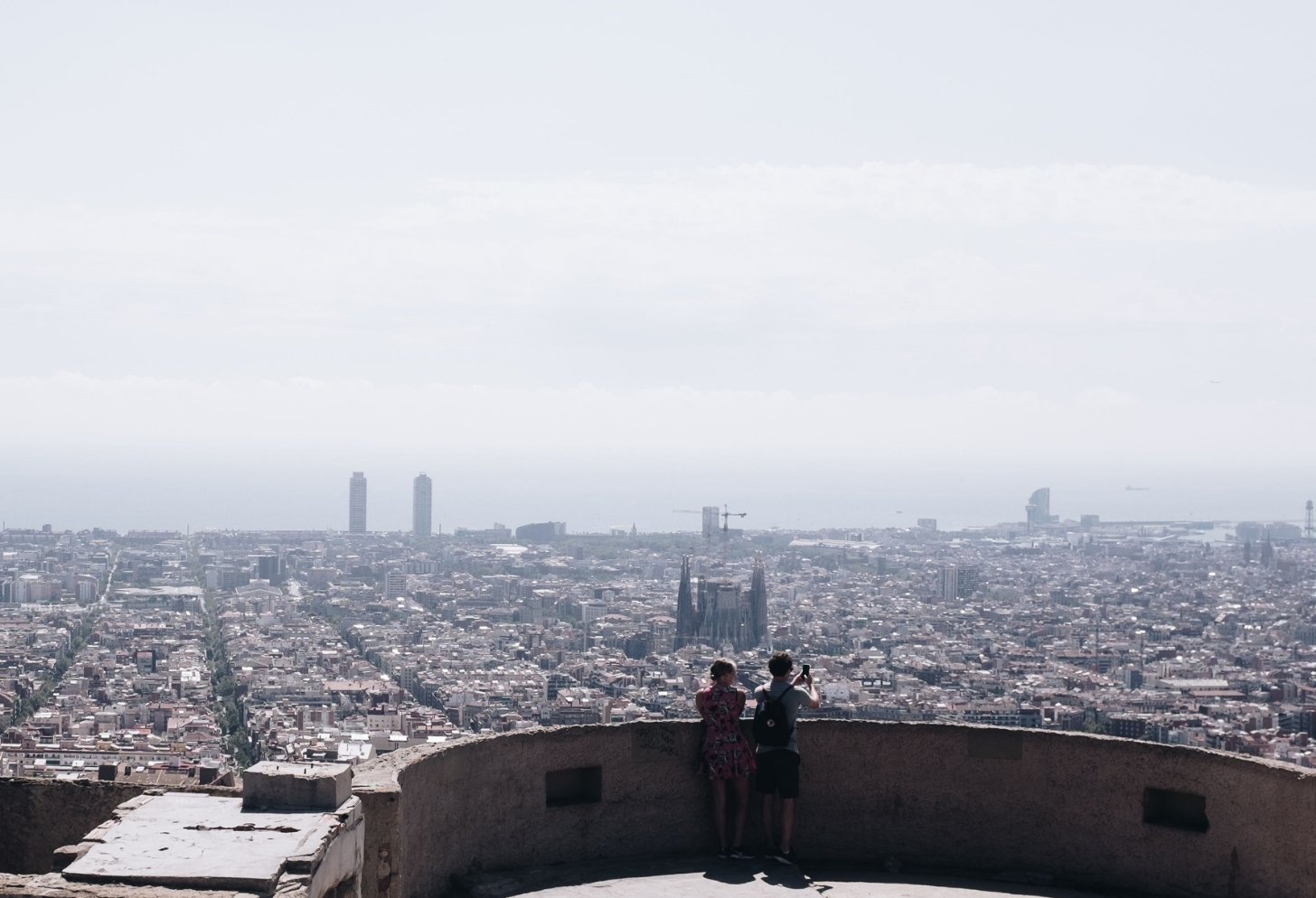
Eixample is Barcelona's central grid, the district Ildefons Cerdà laid out in the 19th century with wide streets, octagonal blocks, and chamfered corners that pull light and air into every junction. What ties its six neighbourhoods together is that grid and the run of Modernista facades along it, from Gaudí to Domènech i Montaner. You get a resident mix of local families, working professionals, students, and long-term internationals, drawn by walkability and services on every block. The district ranges from lively, visited zones like the Dreta and Sagrada Família to calmer, more residential pockets such as the Nova Esquerra and Fort Pienc, so you can set your own pace without leaving the grid.
History and Character of Eixample
After Barcelona tore down its medieval walls in the 1850s, the city needed room to grow. Ildefons Cerdà won approval for a grid stretching toward the then-separate town of Gràcia, and construction began in 1860. The wealthy built along Passeig de Gràcia, on the favoured side of the old railway, which is why the Dreta still holds the grandest apartments and the densest run of Modernista showpieces. West of the tracks, the Esquerra filled in with middle-class housing, while Sant Antoni grew around its market and Fort Pienc around an old fortress square. That split origin explains today's contrast: uniform blocks on the outside, very different street life within.
Is Eixample Right for You?
Eixample suits you if you want to live in the middle of Barcelona with transport, shops, and services on every block. The trade-off is density: the most central and visited streets around Passeig de Gràcia and the Sagrada Família carry constant footfall, while the Nova Esquerra and Fort Pienc swap some of that energy for quieter, more residential blocks and often more room per apartment. Commutes to the business districts and city centre stay short from almost anywhere in the grid. Use the comparison table above to weigh buzz against calm, then open a neighbourhood guide to shortlist the area that fits your routine.
Thinking about moving there?
Discover Ukio’s flexible rental solutions. Book a discovery call with one of our experts.