Lisbon

Understanding life in Alto de Santo Amaro
Why people choose to live here
Alto de Santo Amaro is the hilltop part of Alcântara, around Rua Jau, Calçada da Tapada and the chapel that gives the area its name. You live above the busy valley, on quiet residential streets with views over the Tagus and the 25 de Abril Bridge. The Tapada da Ajuda, a vast wooded park, opens onto Rua Jau, and the river and LX Factory are a short walk downhill. Families and professionals choose it for its calm, its schools and its green space, while staying close to Belém, Alcântara and the centre of Lisbon.
History and architectural character of Alto de Santo Amaro
The Capela de Santo Amaro, built in 1549 and attributed to the architect Diogo de Torralva, crowns the hill with its rare circular plan and a porch lined with 16th century polychrome tiles. For centuries this was a rural slope of farms and country houses above the river. In the late 19th and early 20th centuries, the Marquis of Valle Flôr built his palace on Rua Jau, now the Pestana Palace hotel and a national monument since 1997. Today you see low apartment blocks, tiled facades and small villas along steep streets, with the bridge always on the horizon.

Daily life in Alto de Santo Amaro
Shopping and local services
Daily needs are covered on the hill and just below it. Rua Jau and Calçada da Tapada have local cafés and small shops for everyday errands. For fresh produce, most residents walk down to the Mercado Rosa Agulhas, Alcântara's municipal market on Rua dos Lusíadas, open Monday to Saturday from 7 am to 3 pm. Supermarkets, banks and the post office sit around Largo do Calvário and Rua 1º de Maio, about ten minutes on foot. The Junta de Freguesia de Alcântara, the parish council, handles residents' local paperwork and services.
Education and family life
Schools are a real strength here. The Escola Secundária Fonseca Benevides, on Rua Jau, serves secondary pupils, and the Escola Básica Francisco de Arruda, on Calçada da Tapada, heads a public school group covering the earlier years. Public places depend on your address, so you register through the local school group. For international schools, the Cascais train line from Alcântara-Mar reaches St. Julian's School in Carcavelos. Families use the playgrounds of the Jardim Avelar Brotero and Calçada da Tapada, and the Tapada da Ajuda is ideal for weekend walks with children.
Health and medical services
For everyday care, residents register with the USF de Alcântara, the public family health unit on Rua 1º de Maio, under the national health service (SNS). Pharmacies are within walking distance for routine needs. The public Hospital de Egas Moniz, on Rua da Junqueira, is a few minutes downhill, and Hospital CUF Tejo, a large private hospital on Avenida 24 de Julho, is a short ride away. Many foreign residents combine SNS registration with private health insurance, which gives faster access to specialists and English speaking doctors.
Transportation and connectivity
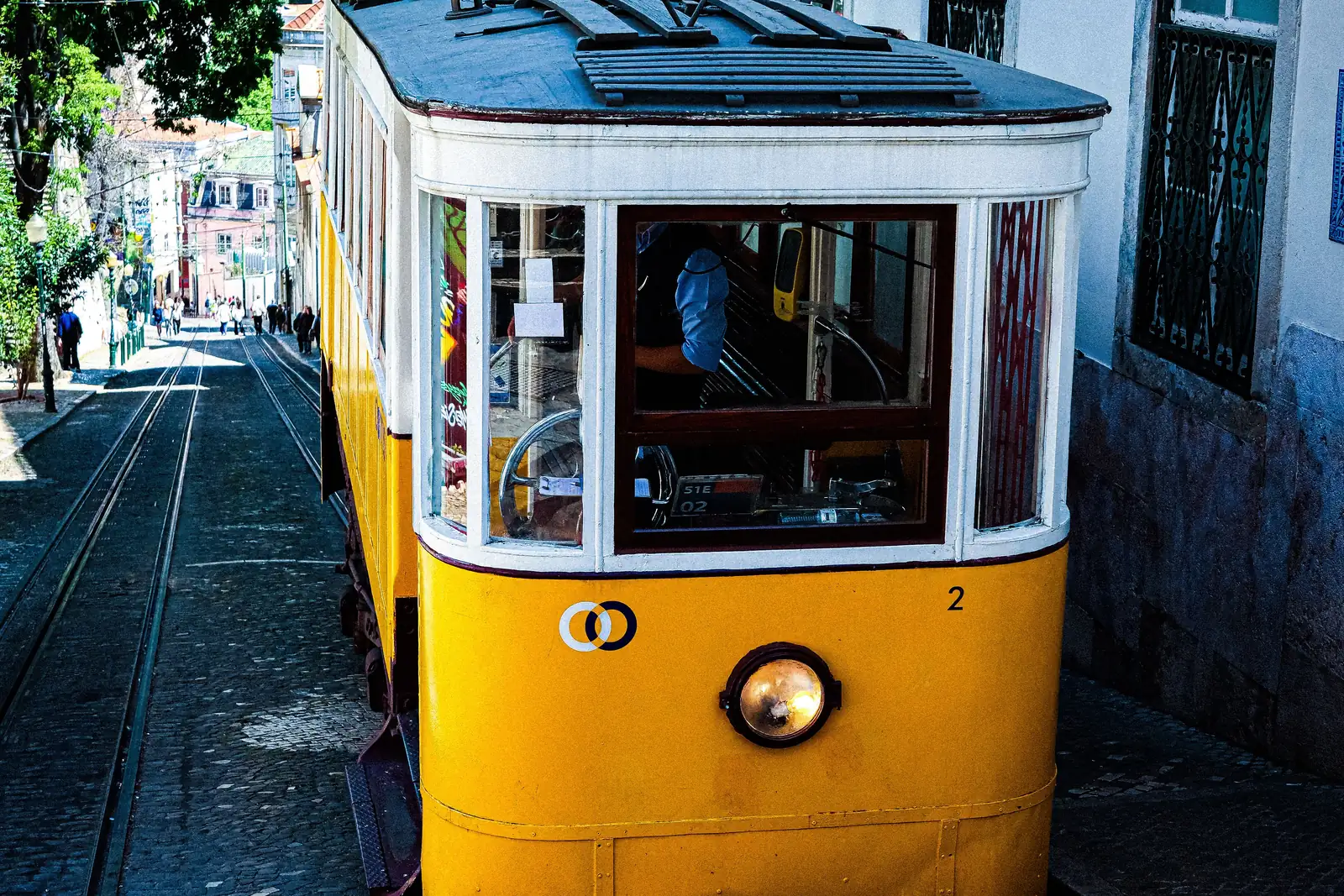
There is no metro station in Alcântara yet; the red line extension is planned for around 2030. The 18E tram, linking Cais do Sodré with Ajuda, climbs Calçada da Tapada and stops at Alto de Santo Amaro, while buses 720, 738, 742 and 760 stop on Rua Jau. Downhill, the 15E tram runs along Rua da Junqueira to Belém and Algés, and Alcântara-Mar station on the Cascais line reaches Cais do Sodré in a few minutes. The steep streets make cycling hard work, but the flat riverside cycle path is just below.
Leisure, culture, and social life
Parks and green spaces
Green space is the big advantage of the hill. The Tapada da Ajuda, a former royal hunting ground now run by the University of Lisbon's agronomy school, covers about 100 hectares of woods, lawns and viewpoints, with a gate on Rua Jau. It is open daily from 7 am to midnight. Closer to home, the Jardim Avelar Brotero has shade and a playground, and the terrace of the Capela de Santo Amaro is a free viewpoint over the bridge, the river and Almada. Below, the riverside promenade along the Doca de Santo Amaro suits running and cycling.
Restaurants, cafés, and nightlife
Evenings on the hill are calm and residential. Valle Flôr, the restaurant of the Pestana Palace on Rua Jau, serves refined Portuguese cuisine in a palace setting with gardens. A Tapadinha, on Calçada da Tapada, is a long standing Russian and Eastern European restaurant right below the bridge. Neighbourhood cafés and pastelarias handle morning coffee. For livelier nights, residents head down to LX Factory, with Cantina LX and A Praça, or to the riverside terraces of the Doca de Santo Amaro. The streets are quiet and feel safe after dark.
Culture and local events
Local culture revolves around the chapel. Each June, the Romaria de Santo Amaro brings concerts, food stalls and processions to the hilltop, a tradition rooted in the parish. The Observatório Astronómico de Lisboa, inside the Tapada da Ajuda, offers free guided visits on some Wednesdays. Downhill, Ler Devagar and the galleries of LX Factory, the Museu da Carris and Village Underground keep a busy programme of talks, exhibitions and concerts. The museums and monuments of Belém, including the Jerónimos Monastery, are only a short tram ride west along Rua da Junqueira.
Ready to make this neighborhood home? Explore our fully furnished apartments, designed for living, not just staying, and move in with nothing but your suitcase.

Unique and varied interior designs to match your style
Our friendly team is here to help. And if you prefer write us to hello@ukio.com
MESSAGE US ON WHATSAPP
LET US KNOW YOUR PREFERENCES