Barcelona
Understanding life in El Born
Why people choose to live here
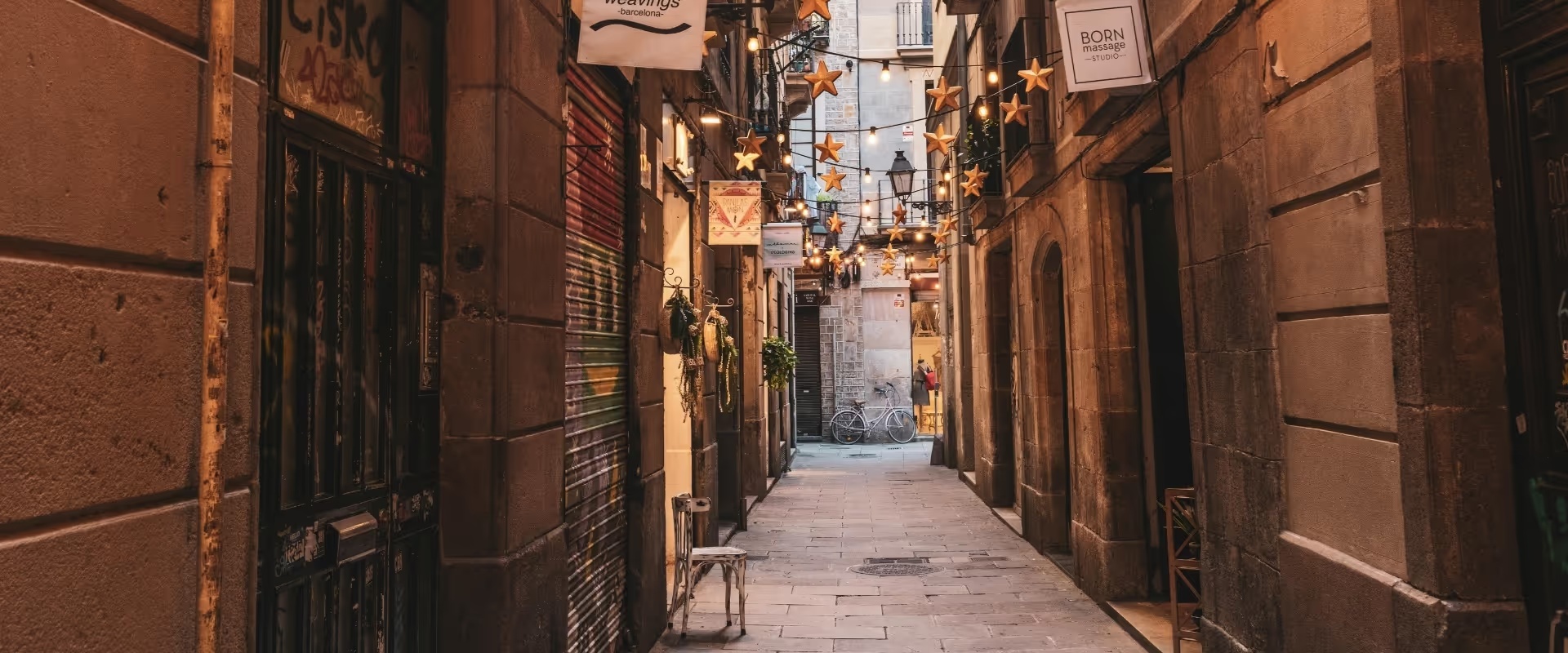
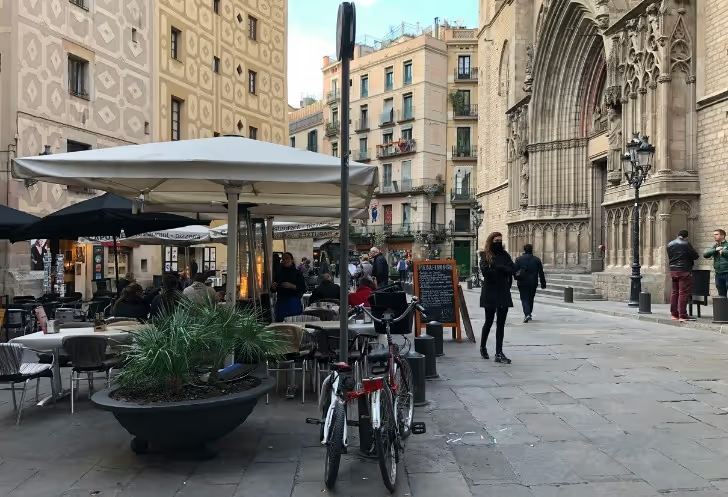
El Born (also called Sant Pere, Santa Caterina i la Ribera) blends medieval texture with creative energy. You live among narrow stone streets, independent boutiques, and cafés that spill into sunlit squares. The atmosphere feels artistic yet grounded, central yet intimate. Everything happens within walking distance: culture, dining, parks, and daily essentials. Residents include designers, entrepreneurs, international professionals, and long-term locals who value character over uniformity. You choose El Born for its authenticity, its density of experiences, and the rare balance between vibrancy and neighborhood familiarity.
History and Architectural Character of El Born
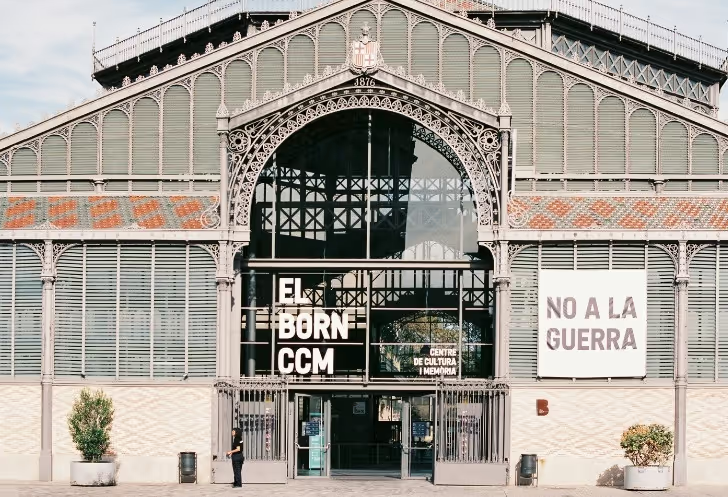
El Born grew during Barcelona’s medieval commercial expansion, when merchants and artisans shaped its identity. Gothic architecture defines the skyline, most notably the Basílica de Santa Maria del Mar, a landmark of Catalan Gothic design. Former palaces, wrought-iron balconies, and restored warehouses reflect centuries of transformation. At El Born Centre de Cultura i Memòria, archaeological remains reveal the district’s layered past beneath a 19th-century market structure. History is not preserved behind glass; it structures everyday life.
Daily Life in El Born
Shopping and Local Services
Daily routines unfold within a compact radius. Fresh produce and local goods are available at Mercat de Santa Caterina. Artisan bakeries, specialty coffee shops, wine merchants, pharmacies, and small supermarkets line Carrer del Rec and surrounding streets. Large chains are rare; independent businesses dominate. Gyms, coworking spaces, and convenience stores integrate seamlessly into residential blocks. You manage errands on foot, often combining them with a café stop or a walk through nearby squares.
Education and Family Life
El Born attracts families who prioritize cultural immersion and walkability. Public schools and nurseries operate within Ciutat Vella, while additional private and international schools are accessible in Eixample. Small playgrounds are scattered across nearby plazas, and Parc de la Ciutadella provides open space for cycling, running, and weekend picnics. The environment suits families comfortable with urban density who want children to grow up surrounded by history, language diversity, and daily exposure to art and architecture.
Health and Medical Services
Primary healthcare centers serve residents within the Ciutat Vella district, supported by multiple local pharmacies. For hospital care, Hospital del Mar is reachable within minutes by bike or taxi. Private clinics and specialists operate in adjacent neighborhoods such as Eixample. Day-to-day medical needs are handled locally, while advanced services remain close without requiring cross-city travel.
Transportation and Connectivity
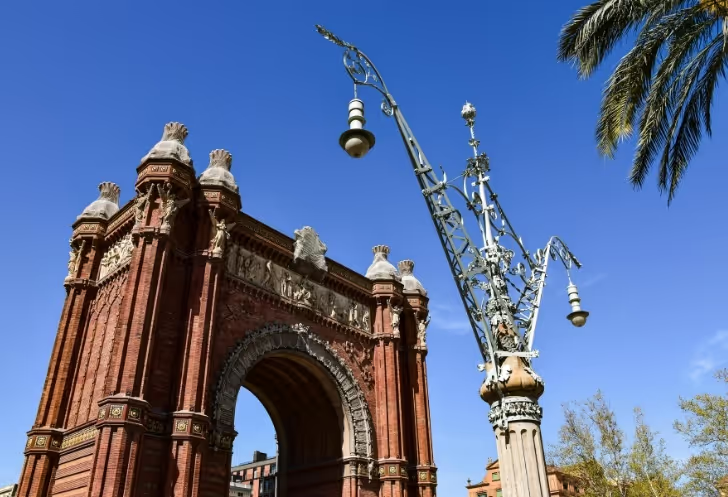
El Born is highly connected despite its medieval layout. Jaume I (L4) and Arc de Triomf (L1) metro stations serve the area, providing access to the beach, Eixample, and major transport hubs. Arc de Triomf also connects to Rodalies regional trains. Several bus lines run along Via Laietana and Passeig de Lluís Companys. Most residents rely on walking or cycling due to the compact street network. Plaça Catalunya is approximately a 10-minute walk. Parking is limited and primarily reserved for residents.
Leisure, Culture, and Social Life
Parks and Green Spaces
El Born’s dense streets open toward generous green space at Parc de la Ciutadella. The park functions as an extension of the neighborhood: morning runs, outdoor workouts, family afternoons, and informal gatherings. Smaller squares such as Plaça Comercial and Plaça de Sant Pere provide everyday breathing room within the historic grid. Access to open space offsets the compact urban fabric and shapes a balanced rhythm between intensity and calm.
Restaurants, Cafés, and Nightlife
Evenings in El Born feel animated but controlled. Streets glow with warm light from tapas bars and wine cellars. Representative venues include El Xampanyet, Cal Pep, Tosca del Carme, and Picnic Born. Cafés double as remote work hubs during the day and social spaces at night. Foot traffic remains steady, creating a sense of safety and presence rather than excess nightlife disruption.
Culture and Local Events
Cultural density defines El Born. Independent galleries, design studios, and artisan workshops occupy historic buildings. Seasonal markets and neighborhood festivals activate small plazas throughout the year. Museums and exhibition spaces sit within walking distance, reinforcing daily contact with art and heritage. Cultural engagement is not an occasional event; it is embedded into the district’s structure and pace.
Ready to make this neighborhood home? Explore our fully furnished apartments, designed for living, not just staying, and move in with nothing but your suitcase.

Unique and varied interior designs to match your style
Our friendly team is here to help. And if you prefer write us to hello@ukio.com
MESSAGE US ON WHATSAPP
LET US KNOW YOUR PREFERENCES