Madrid
Understanding life in Huertas-Cortes
Why people choose to live here
Huertas-Cortes sits in the heart of Madrid's Centro district, between the Paseo del Prado and Puerta del Sol. You get the cultural weight of the old city without the relentless crowds of Sol or Gran Vía. Most streets are pedestrianised, so daily life happens on foot, and steady evening footfall keeps them feeling safe. The mix of residents is broad: long-standing madrileños, creative professionals, and international newcomers drawn by the theatres, galleries, and tapas culture. People pick it for a central, walkable base where independent shops and neighbourhood bars still outnumber chains.
History and architectural character of Huertas-Cortes
The neighbourhood grew in the 17th century as home to Spain's Golden Age writers, including Cervantes, Lope de Vega, and Quevedo. That literary past explains its nickname, the Barrio de las Letras, and the author quotations set into the paving of Calle de las Huertas. Streets stay narrow and low-rise, lined with restored townhouses, wrought-iron balconies, and ochre facades typical of old Madrid. You can still visit the Casa Museo Lope de Vega on Calle Cervantes and the Convento de las Trinitarias, where Cervantes is buried, both within a few blocks.
Daily life in Huertas-Cortes
Shopping and local services
For everyday shopping, you stay close to home. The Mercado de Antón Martín, at the neighbourhood's southern edge, covers fresh produce, fish, meat, and small food stalls under one roof. Traditional grocers such as the century-old Alimentación Quiroga on Calle de las Huertas sit beside bakeries, wine shops, and compact supermarkets scattered across the barrio. Pharmacies are easy to find on Calle de las Huertas, Calle del León, and Calle Cervantes. Most errands, from picking up bread to refilling a prescription, take a short walk rather than a metro ride.
Education and family life
Families with young children have options nearby. The municipal nursery El Sol de las Letras on Costanilla de los Desamparados serves the Cortes area, alongside private early-years centres like Escuela Infantil Letras. Public primary and secondary schools are limited inside the barrio itself, so many families look to surrounding Centro; you can check catchment and availability through the Comunidad de Madrid school finder. Squares such as Plaza de Santa Ana give children room to play, and El Retiro is a short walk east. The area suits couples and small families who value a central, car-free routine over garden space.
Health and medical services
Primary care runs through the public Centro de Salud Las Cortes on Carrera de San Jerónimo, which handles routine appointments for residents registered in the area. Pharmacies are dense, with several on Calle de las Huertas and Calle del León, and a rotating late-night pharmacy is always within reach in central Madrid. For hospital care, the Hospital General Universitario Gregorio Marañón lies a short taxi or metro ride north-east. Day to day, most needs are met locally: you register with the health centre, use nearby pharmacies, and reserve the hospital for specialist or emergency visits.
Transportation and connectivity
Two metro stations sit inside or right on the neighbourhood: Antón Martín (Line 1) and Sevilla (Line 2). Within a short walk you also reach Sol (Lines 1, 2, and 3), Banco de España (Line 2), and Estación del Arte (Line 1). Atocha, Madrid's main Cercanías and high-speed rail hub, is close by for regional and national trips. Frequent EMT buses and BiciMAD electric bikes fill the gaps, though most residents simply walk. The area falls inside the low-emission zone, and on-street parking is regulated and scarce, so a car is more burden than benefit.
Leisure, culture, and social life
Parks and green spaces
Huertas-Cortes is dense and built-up, so its green life centres on squares rather than large parks. Plaza de Santa Ana and Plaza del Ángel give you room to sit, and the small Jardín del Ángel beside the Iglesia de San Sebastián offers a quiet pause off Calle de las Huertas. For a proper green break, the Real Jardín Botánico and El Retiro sit just across the Paseo del Prado, a five to ten minute walk east. That combination means you trade on-block gardens for two of the city's finest green spaces within easy reach.
Restaurants, cafés, and nightlife
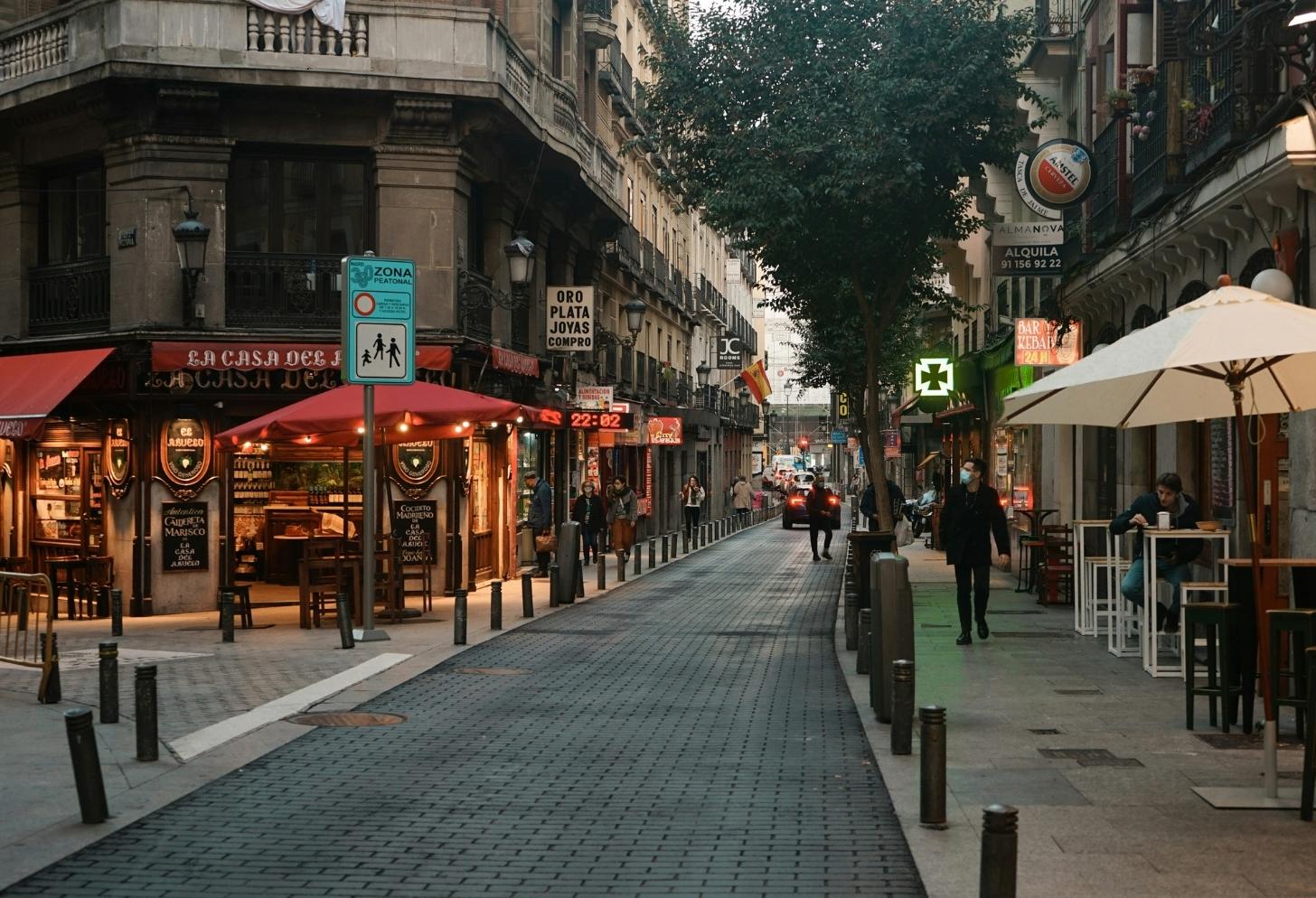
Evenings here are busy but rarely rowdy, centred on Plaza de Santa Ana and Calle de las Huertas. For classic Madrid tapas and vermouth on tap, Casa Alberto has poured since 1827. La Venencia serves only sherry in a bar frozen in time, while Cervecería Alemana anchors the plaza with beer and simple plates. For something modern, Triciclo reworks seasonal cooking and Salmón Gurú mixes some of the city's best cocktails. Streets stay well lit and populated late, so walking home feels comfortable most nights.
Culture and local events
Culture sits at street level here. The Teatro Español on Plaza de Santa Ana stages drama year-round, the Ateneo de Madrid keeps a historic library and lecture hall on Calle del Prado, and small galleries and design shops dot the side streets. Community life shows up in the Mercado de las Ranas, a street market held on Calle de las Huertas on selected Saturdays, and in DecorAcción, the barrio's annual design and culture festival each June. You can track what is on through the official Madrid city events calendar.
Ready to make this neighborhood home? Explore our fully furnished apartments, designed for living, not just staying, and move in with nothing but your suitcase.

Unique and varied interior designs to match your style
Our friendly team is here to help. And if you prefer write us to hello@ukio.com
MESSAGE US ON WHATSAPP
LET US KNOW YOUR PREFERENCES